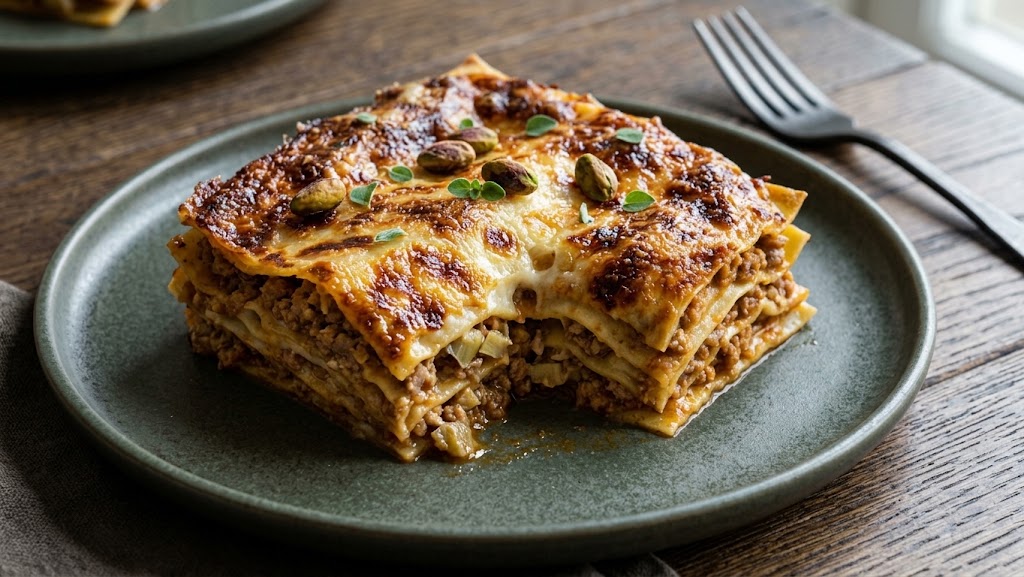
This Delia Smith lasagne al forno is the sort of comforting, proper dinner that fills the kitchen with the smell of slow-simmered tomatoes, savoury mince, and nutmeg-scented béchamel. Expect rich layers with a tender bite, a silky white sauce, and a golden top that turns just crisp at the edges. It is a moderate-difficulty recipe, but every step is straightforward and absolutely worth it. Total time is about 2 hours 15 minutes, most of it hands-off while the sauce simmers and the lasagne bakes.
Ingredients
For the meat ragù
- 2 tbsp olive oil
- 150g pancetta or streaky bacon, finely chopped
- 1 large onion, finely chopped
- 1 medium carrot, finely diced
- 1 celery stick, finely diced
- 2 garlic cloves, crushed
- 700g beef mince
- 2 tbsp tomato purée
- 150ml dry red wine (optional)
- 2 x 400g tins chopped tomatoes
- 200ml beef stock
- 1 bay leaf
- 1 tsp dried oregano (or 1 tbsp chopped fresh)
- 150ml whole milk
- Salt and black pepper, to taste
For the béchamel sauce
- 60g unsalted butter
- 60g plain flour
- 750ml whole milk, warmed
- 1/4 tsp freshly grated nutmeg
- 75g Parmesan, finely grated
- Salt and white pepper, to taste
To assemble
- 250g dried lasagne sheets (no-pre-cook)
- 200g mozzarella, torn (optional, but lovely for a gooier middle)
- 30g Parmesan, for the top
- A little butter or olive oil, for greasing the dish
How to Make Delia Smith Lasagne al Forno Recipe
Oven preparation
- Prepare the oven: Preheat the oven to 200°C (400°F) or 180°C fan. Place a shelf in the middle so the lasagne bakes evenly and the topping colours nicely.
- Ready the dish: Lightly grease a deep baking dish (about 33 x 23cm). Keep it nearby so you can assemble while everything is hot.
Make the meat ragù
- Soften the base: Warm the olive oil in a large, heavy pan over medium heat. Add pancetta, onion, carrot, and celery, then cook for 8 to 10 minutes until soft and fragrant, but not browned.
- Add garlic: Stir in the crushed garlic and cook for 30 seconds, just until you smell it.
- Brown the mince: Add the beef mince and turn the heat up slightly. Cook until well browned, breaking it up with a wooden spoon so you do not end up with big clumps.
- Build the sauce: Stir in the tomato purée. Pour in the red wine (if using) and let it bubble for 1 to 2 minutes. Add the chopped tomatoes, stock, bay leaf, and oregano.
- Simmer until thick: Turn the heat down and simmer gently, partially covered, for 35 to 45 minutes. Stir now and then. You want a rich, thick ragù that holds its shape on a spoon.
- Finish with milk: Stir in the milk, season with salt and black pepper, then simmer for 5 minutes more. Remove the bay leaf.
Make the béchamel sauce
- Make a roux: Melt the butter in a saucepan over medium heat. Add the flour and stir continuously for 1 minute to cook out the raw flour taste.
- Whisk in the milk: Add the warm milk a splash at a time, whisking until smooth after each addition. Once all the milk is in, keep whisking until the sauce thickens to a creamy, pourable consistency.
- Season and enrich: Add nutmeg, a pinch of salt, and white pepper. Stir in the grated Parmesan and remove from the heat.
Assemble the lasagne
- Start with sauce: Spoon a thin layer of ragù over the bottom of your baking dish. This stops the pasta sticking and helps it soften evenly.
- Layer it up: Add a layer of lasagne sheets (break to fit neatly). Top with ragù, then a layer of béchamel. Add a little mozzarella if using.
- Repeat: Continue layering until you have used everything, finishing with a generous layer of béchamel.
- Top for a golden crust: Sprinkle over the Parmesan. For extra browning, add a few small dots of butter on top (optional).
Bake and cool
- Bake: Place the dish on a tray (handy for any bubbly spills) and bake for 35 to 45 minutes, until deeply golden on top and bubbling at the edges. If it browns too quickly, lay a piece of foil loosely over the top.
- Rest before slicing: Leave the lasagne to stand for 10 to 15 minutes. This makes it easier to portion, and the layers taste even better once they settle.
Tips
Why is my lasagne watery?
The ragù needs to be properly reduced. Simmer it until thick and rich, and do not rush this step. Also, let the baked lasagne rest before cutting so the juices are reabsorbed into the layers.
How do I keep béchamel smooth with no lumps?
Warm the milk first and add it gradually, whisking constantly. If you do get a few lumps, whisk vigorously off the heat for a moment, or pass the sauce through a sieve before assembling.
Do I need to pre-cook lasagne sheets?
Most modern dried sheets are “no-pre-cook” and soften perfectly in the oven. Make sure your ragù is saucy enough to hydrate the pasta, and that you have béchamel touching the sheets rather than leaving dry corners.
How do I stop the top from burning before the middle is hot?
Bake on the middle shelf and cover loosely with foil once it is golden. This protects the top while the centre finishes heating and the pasta softens.
Serving Suggestions
- Crisp green salad with a sharp vinaigrette
- Garlic bread or warm focaccia
- Roasted courgettes, peppers, or broccoli
- A glass of Chianti or a soft, fruity red
Storage
Room temperature
Let the lasagne cool, then keep it out at room temperature for up to 2 hours before refrigerating. For food safety, do not leave it out overnight.
Refrigerator
Store tightly covered in the fridge for 3 to 4 days. Reheat portions in a 180°C oven until piping hot, or microwave gently, covering to prevent drying out.
Freezing
Freeze in portions or as a whole dish, well wrapped, for up to 2 to 3 months. Thaw overnight in the fridge before reheating. If reheating from chilled, cover with foil for the first part of baking so the top does not over-brown.
Nutrition
- Calories: 720 kcal
- Carbohydrates: 55g
- Protein: 38g
- Fat: 38g
- Saturated fat: 18g
- Sodium: 980mg
Nutrition values are estimates and will vary based on exact ingredients and brands used.
FAQs
Can I make lasagne al forno the day before?
Yes. Assemble it completely, cool, cover tightly, and refrigerate overnight. Bake the next day, adding 10 to 15 minutes to the baking time if it is going into the oven straight from the fridge.
Can I freeze lasagne before baking?
You can. Assemble in a freezer-safe dish, wrap very well, and freeze for up to 2 months. Thaw overnight in the fridge, then bake as directed, allowing a little extra time to ensure the centre is piping hot.
What is the best cheese for the top of lasagne al forno?
Parmesan gives the most classic, savoury crust. A little mozzarella inside the layers adds lovely stretch, but keep Parmesan on top for flavour and browning.
Why are my lasagne sheets still hard after baking?
This usually means the sauce was too thick or the pasta was not fully covered. Make sure each sheet has ragù and béchamel in contact with it, especially around the edges, and bake until the centre is bubbling hot.
How do I reheat lasagne without drying it out?
Reheat covered. In the oven, cover with foil and warm at 180°C until hot all the way through. For single portions in the microwave, add a teaspoon of water around the edge and cover before heating.

Delia Smith Lasagne al Forno Recipe
Course: Main CourseCuisine: ItalianDifficulty: Moderate6
servings30
minutes1
hour45
minutes135
minutes720
kcal2
hours15
minutesA classic lasagne al forno with a rich meat ragu, silky béchamel, and golden Parmesan topping. Comforting, hearty, and perfect for make-ahead family dinners.
Ingredients
- For the meat ragu
2 tbsp olive oil
150g pancetta or streaky bacon, finely chopped
1 large onion, finely chopped
1 medium carrot, finely diced
1 celery stick, finely diced
2 garlic cloves, crushed
700g beef mince
2 tbsp tomato puree
150ml dry red wine (optional)
2 x 400g tins chopped tomatoes
200ml beef stock
1 bay leaf
1 tsp dried oregano
150ml whole milk
Salt and black pepper, to taste
- For the béchamel sauce
60g unsalted butter
60g plain flour
750ml whole milk, warmed
1/4 tsp freshly grated nutmeg
75g Parmesan, finely grated
Salt and white pepper, to taste
- To assemble
250g dried lasagne sheets (no-pre-cook)
200g mozzarella, torn (optional)
30g Parmesan, for the top
A little butter or olive oil, for greasing the dish
Directions
- Preheat the oven to 200°C (180°C fan). Grease a deep 33 x 23cm baking dish.
- Make the ragu: soften pancetta, onion, carrot and celery in olive oil for 8 to 10 minutes.
- Add garlic and mince, then brown well, breaking up any lumps.
- Stir in tomato puree, wine (if using), tomatoes, stock, bay and oregano. Simmer gently for 35 to 45 minutes.
- Stir in milk, season to taste, and simmer 5 minutes more.
- Make the béchamel: melt butter, stir in flour, cook 1 minute, then whisk in warm milk gradually until smooth and thick.
- Season béchamel with nutmeg, salt and white pepper, then stir in Parmesan.
- Assemble: layer a little ragu, lasagne sheets, ragu, béchamel (and mozzarella if using). Repeat, finishing with béchamel and Parmesan.
- Bake 35 to 45 minutes until bubbling and golden. Cover loosely with foil if it browns too quickly.
- Rest 10 to 15 minutes before slicing and serving.
Notes
- Simmer the ragu until thick. A watery sauce is the fastest way to a sloppy lasagne.
- Warm the milk for the béchamel so it thickens quickly and stays smooth.
- Resting before slicing helps the layers set neatly.