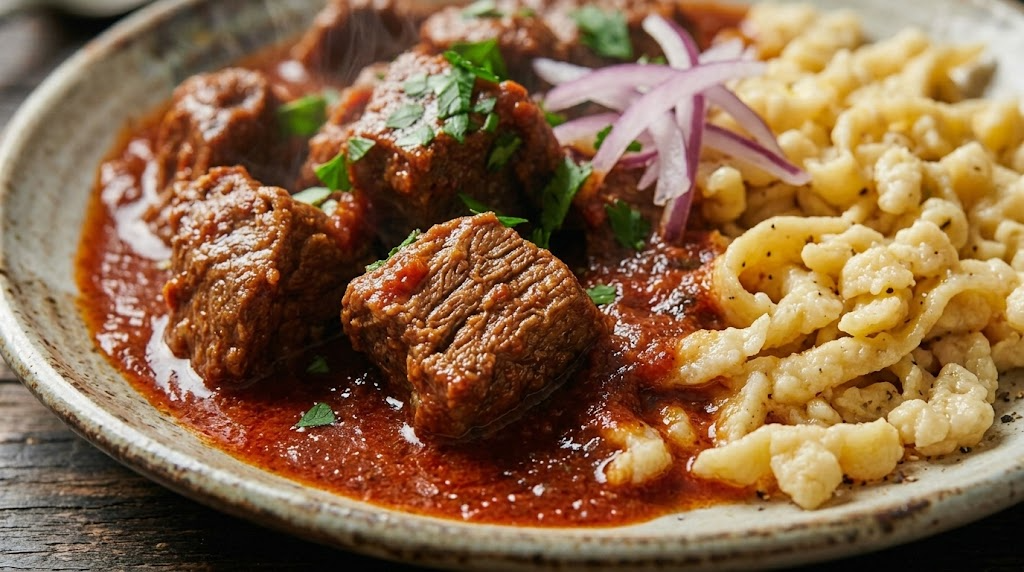
This comforting Hungarian-style goulash is a rich, paprika-forward beef stew with meltingly tender meat, a thick savoury sauce, and just enough warmth to keep you coming back for another spoonful. It tastes deeply rounded rather than fiery, with sweet peppers, soft onions, and a gentle tang if you finish it with sour cream. It’s an easy, steady recipe that mostly looks after itself in the oven once you’ve browned the beef. Total time is about 2 hours 20 minutes, with only 20 minutes of hands-on prep.

Ingredients
For the goulash
- 2 tbsp vegetable oil (or lard), divided
- 900g braising steak or chuck, cut into 3cm chunks
- 2 large onions, thinly sliced
- 4 garlic cloves, finely chopped
- 3 tbsp sweet Hungarian paprika
- 1 tsp smoked paprika (optional)
- 1 tsp caraway seeds, lightly crushed
- 1½ tsp fine salt, plus more to taste
- ½ tsp black pepper
- 2 tbsp plain flour
- 2 tbsp tomato purée
- 450ml beef stock, hot
- 250ml passata (or 1 x 400g tin chopped tomatoes)
- 2 red peppers, deseeded and sliced
- 1 bay leaf
- 1 tbsp red wine vinegar (or lemon juice)
To finish and serve
- 150ml sour cream (optional, but traditional and delicious)
- 2 tbsp chopped flat-leaf parsley
- Cooked buttered noodles, rice, or mash
How to Make Hungarian Goulash
- Prepare the oven: Preheat the oven to 160°C or 140°C fan. Place a shelf in the middle so the casserole cooks evenly. Put a large, lidded casserole dish (or Dutch oven) on the hob over medium heat.
- Brown the beef: Pat the beef dry with kitchen paper, then season lightly. Heat 1 tablespoon of the oil and brown the beef in batches until it has good colour. Lift each batch out onto a plate. Take your time here, it builds the flavour.
- Soften the onions: Add the remaining 1 tablespoon oil to the pot. Tip in the sliced onions with a pinch of salt and cook for 8 to 10 minutes, stirring often, until soft and lightly golden. Stir in the garlic for 1 minute.
- Mix in the paprika (without burning it): Take the pot off the heat. Stir in the sweet paprika, smoked paprika (if using), and crushed caraway seeds for 20 to 30 seconds. Keeping paprika off direct heat stops it turning bitter.
- Build the sauce: Sprinkle over the flour and stir for 1 minute. Mix in the tomato purée, then gradually add the hot stock, stirring well and scraping up any browned bits from the bottom.
- Assemble the casserole: Return the browned beef (and any juices) to the pot. Add the passata (or chopped tomatoes), sliced peppers, bay leaf, salt, and pepper. Bring to a gentle simmer.
- Bake until tender: Cover with the lid and transfer to the oven. Cook for 1 hour 45 minutes to 2 hours, stirring once halfway through, until the beef is tender and the sauce is rich and spoon-coating.
- Rest (cooling step): Remove from the oven and stir in the vinegar (or lemon juice). Taste and adjust seasoning. Rest the goulash, covered, for 10 minutes so the meat relaxes and the sauce thickens slightly.
- Finish and serve (assembling step): Spoon the goulash over buttered noodles, rice, or mash. Swirl through sour cream if you like, then scatter with parsley and serve hot.
Tips
Why does my goulash taste bitter?
Bitterness nearly always comes from paprika catching on high heat. Take the pot off the hob before you stir in the paprika and only warm it briefly, then immediately add liquid ingredients.
How do I make the sauce thicker?
Leave the lid slightly ajar for the last 20 minutes in the oven, or simmer on the hob for 10 minutes uncovered. If you want a quicker fix, mash a few pieces of beef and onion against the side of the pot to naturally thicken the sauce.
What cut of beef gives the most tender result?
Braising steak, chuck, or blade are ideal. They have enough fat and connective tissue to become silky and tender with slow cooking, unlike leaner steak which can dry out.
Can I make it less rich or less spicy?
Use only sweet paprika (skip smoked paprika) and finish with sour cream to soften the flavour. This dish is warmly spiced rather than hot, but you can reduce the paprika slightly if you prefer.
Serving Suggestions
- Buttered tagliatelle or egg noodles, plus extra parsley
- Fluffy mashed potatoes and steamed green beans
- Rice or buttered new potatoes with a crisp cucumber salad
- Crusty bread to mop up the sauce
Storage
Room temperature
Cool the goulash quickly, then don’t leave it out for more than 2 hours (or 1 hour in a warm kitchen). Once cooled, refrigerate promptly.
Refrigerator
Store in an airtight container for up to 3 days. Reheat gently on the hob with a splash of water or stock, stirring often, until piping hot throughout.
Freezing
Freeze in well-sealed portions for up to 3 months. Defrost overnight in the fridge, then reheat slowly. If you plan to freeze, it’s best to add sour cream only when serving, not before freezing.
Nutrition
- Calories: 520 kcal
- Carbohydrates: 18 g
- Protein: 44 g
- Fat: 28 g
- Saturated Fat: 9 g
- Sodium: 980 mg
Nutrition values are estimates and will vary depending on the exact ingredients and brands you use.
FAQs
Can I make Hungarian goulash in a slow cooker?
Yes. Brown the beef and soften the onions first, then transfer everything to the slow cooker. Cook on LOW for 7–8 hours or HIGH for 4–5 hours, until the beef is tender. Thicken at the end by simmering uncovered on the hob or leaving the lid ajar for the last 30 minutes on HIGH.
What is the best paprika to use for goulash?
Sweet Hungarian paprika gives the classic flavour and colour. Smoked paprika is optional but adds depth. Avoid old paprika that has been sitting in the cupboard for years, it tastes flat and can turn bitter more easily.
Can I make goulash ahead of time?
Absolutely. It’s even better the next day. Cook, cool quickly, refrigerate overnight, then reheat gently on the hob with a splash of water or stock until piping hot.
Why is my beef still tough after cooking?
It usually needs more time. Tough cuts become tender when the connective tissue breaks down, which can take longer depending on the size of your chunks and your oven. Keep cooking at a low temperature and check every 20 minutes until it’s truly tender.
Can I freeze beef goulash with sour cream in it?
You can, but the texture can split slightly on reheating. For the best finish, freeze the goulash without sour cream and add it fresh when serving.
Hungarian Goulash
Course: Main CourseCuisine: HungarianDifficulty: Easy6
servings20
minutes2
hours140
minutes520
kcal2
hours20
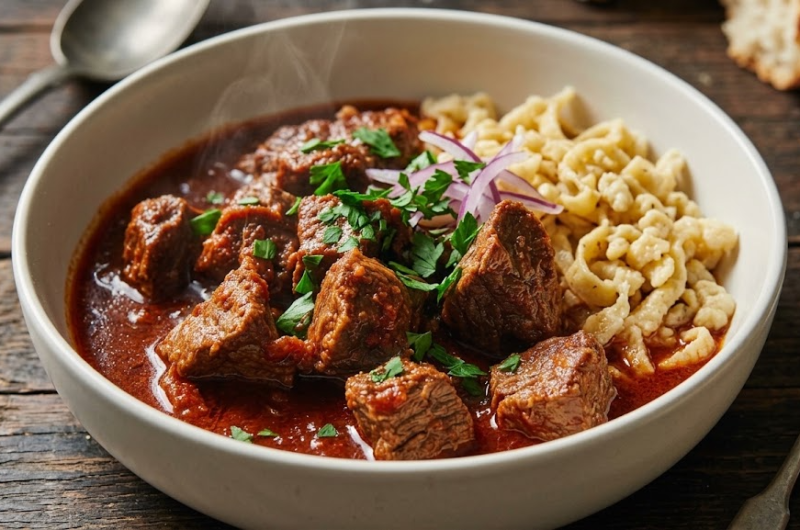
minutesA Delia-style Hungarian goulash with tender beef, lots of sweet paprika, peppers, and a rich, gently spiced sauce. Easy to make, perfect for cosy dinners and make-ahead meals.
Ingredients
2 tbsp vegetable oil (or lard), divided
900g braising steak or chuck, cut into 3cm chunks
2 large onions, thinly sliced
4 cloves garlic, finely chopped
3 tbsp sweet Hungarian paprika
1 tsp smoked paprika (optional but lovely)
1 tsp caraway seeds, lightly crushed
1½ tsp fine salt, plus more to taste
½ tsp black pepper
2 tbsp plain flour
2 tbsp tomato purée
450ml beef stock, hot
250ml passata (or 1 x 400g tin chopped tomatoes)
2 red peppers, deseeded and sliced
1 bay leaf
1 tbsp red wine vinegar (or lemon juice)
150ml sour cream, to finish (optional)
2 tbsp chopped flat-leaf parsley, to serve
Cooked buttered noodles, rice, or mash, to serve
Directions
- Preheat the oven to 160°C (140°C fan). Place a shelf in the middle. Warm a large, lidded casserole dish on the hob.
- Season the beef lightly. Heat 1 tbsp oil and brown the beef in batches until well coloured. Remove to a plate.
- Add the remaining 1 tbsp oil. Cook the onions with a pinch of salt for 8–10 minutes until soft and lightly golden. Stir in the garlic for 1 minute.
- Take the pan off the heat. Stir in the sweet paprika, smoked paprika (if using), and caraway for 20–30 seconds so the spices bloom without burning.
- Sprinkle in the flour and stir for 1 minute. Mix in the tomato purée, then gradually stir in the hot stock, scraping up any browned bits.
- Return the beef to the pot with any juices. Add passata (or tomatoes), peppers, bay leaf, salt and pepper. Bring to a gentle simmer.
- Cover and bake for 1 hour 45 minutes to 2 hours, stirring once halfway through, until the beef is tender and the sauce is rich.
- Stir in the vinegar (or lemon juice). Taste and adjust salt and pepper. Rest, covered, for 10 minutes so the sauce settles.
- Serve hot over noodles, rice, or mash. Swirl through sour cream if you like, and finish with plenty of parsley.
Notes
- For the best flavour, use good-quality sweet Hungarian paprika and add it off the heat so it doesn’t turn bitter.
- Browning in batches is worth it. If you crowd the pan, the beef steams and you lose that deep, savoury base.
- Goulash tastes even better the next day. Cool quickly, chill overnight, then reheat gently.
- If you prefer a looser, soupier goulash, add an extra 200–300ml stock near the end and warm through.