If you love a proper British starter, this chicken liver pâté is the one I come back to again and again. It’s smooth, rich, and lightly silky, with a gentle sweetness from onion and a warming hint of brandy. The technique is straightforward, but it feels special, and the oven bain-marie makes the texture reliably tender. Allow about 3 hours in total, including chilling time, although the hands-on work is quick.

Ingredients
For the pâté
- 450g chicken livers, trimmed of any green bits and tough sinew
- 1 small onion, finely chopped
- 1 clove garlic, crushed
- 2 tbsp unsalted butter (for frying)
- 1 tbsp olive oil
- 1 tsp fresh thyme leaves (or 1/2 tsp dried thyme)
- 1/2 tsp fine salt, plus more to taste
- 1/4 tsp black pepper
- 2 tbsp brandy or cognac
- 120ml double cream
- 75g unsalted butter, softened (for blending)
- Pinch of ground mace or nutmeg (optional)
For the butter seal
- 80g unsalted butter
- 1 bay leaf (optional, for the top)
To serve (optional, but lovely)
- Toast or warm baguette slices
- Cornichons or pickled onions
- Red onion chutney or a sharp fruit chutney
How to Make Chicken Liver Pâté
Oven preparation
- Prepare the oven: Preheat the oven to 160°C or 140°C fan. Place a shelf in the middle so the bain-marie heats gently and evenly.
- Set up the bain-marie: Put a kettle on to boil. Set a medium roasting tin on the counter and choose a pâté dish (about 18–20cm long) or 4–6 ramekins.
Mixing (cooking the base and blending)
- Soften the onion: Melt 2 tablespoons butter with the oil in a frying pan over low heat. Add the onion and cook for 8–10 minutes until soft and sweet, not browned.
- Add garlic and thyme: Stir in the garlic and thyme and cook for 1 minute, just until fragrant.
- Cook the livers: Turn the heat up to medium. Add the chicken livers, season with salt and pepper, and cook for 3–5 minutes, stirring often. You want them lightly browned on the outside but still a touch pink in the centre for a tender pâté.
- Add the brandy: Pour in the brandy and let it bubble for 30–60 seconds, scraping the pan to lift any flavour from the bottom.
- Blend until smooth: Tip everything into a food processor. Add the cream, the 75g softened butter, and a pinch of mace or nutmeg if using. Blend for 1–2 minutes, stopping to scrape down the bowl, until very smooth.
- Optional for extra silkiness: Push the mixture through a fine sieve into a bowl, then taste and adjust seasoning.
Baking (gentle set)
- Fill the dish: Pour the pâté mixture into your chosen dish or ramekins and smooth the top.
- Add hot water: Place the dish in the roasting tin. Carefully pour in hot water from the kettle so it comes about halfway up the sides of the dish.
- Bake: Bake for 25–30 minutes, until the centre is just set (it should wobble slightly, not slosh). If you have a thermometer, aim for about 70°C in the centre.
Cooling (for the best texture)
- Cool gently: Lift the dish out of the water bath and leave it to cool at room temperature for 45–60 minutes.
- Chill: Cover and refrigerate for at least 1 hour, or until firm enough to take the butter seal neatly.
Assembling (the butter seal)
- Melt the butter: Melt the 80g butter in a small pan over low heat. Let it sit for 2 minutes so the milky solids sink and the foam rises.
- Clarify it quickly: Skim off the foam, then carefully pour the clear yellow butter over the chilled pâté, leaving the milky layer behind in the pan.
- Finish and chill: Add a bay leaf on top if you like. Refrigerate for 2 hours, or until the butter is fully set.

Tips
Why is my pâté grainy instead of smooth?
Graininess usually comes from under-blending or letting the mixture cool too much before blending. Blend while the liver mixture is still warm, and for a very refined texture, pass it through a fine sieve.
How do I stop chicken livers tasting bitter?
Trim well. Any greenish patches (from the gall bladder) will make the whole batch bitter. I also find gentle cooking helps; high heat can toughen the livers and concentrate strong flavours.
What if my pâté is too firm?
That’s often a sign it baked a bit too long. Next time, pull it when it still has a slight wobble in the centre. You can also serve it after 10–15 minutes at room temperature so it spreads easily.
Do I really need the butter seal?
It’s optional, but worth it. The butter seal protects the surface from drying and keeps the flavour fresher for longer. It also makes it feel like a proper dinner-party pâté.
Serving Suggestions
- Spread on hot toast with cornichons and a little Dijon mustard.
- Serve with oatcakes, chutney, and a simple green salad for lunch.
- Add to a cheeseboard with crisp apples or pear slices.
- Pair with a glass of dry sherry or a light red wine.
Storage
Room temperature
For food safety, don’t leave pâté out for more than 2 hours. If you’re serving it, let it sit out for 10–15 minutes to soften, then return it to the fridge.
Refrigerator
Keep covered and refrigerated. With the butter seal intact, it keeps well for up to 5 days. Once opened and scooped into, aim to finish within 3–4 days for the best flavour.
Freezing
You can freeze the baked pâté (preferably before adding the butter seal) for up to 2 months. Wrap tightly, then thaw overnight in the fridge. Add a fresh butter seal after thawing for the best finish.
Nutrition
- Calories: 285 kcal
- Carbohydrates: 3 g
- Protein: 12 g
- Fat: 25 g
- Saturated Fat: 12 g
- Sodium: 320 mg
Nutrition values are estimates and will vary depending on brands, exact quantities, and serving size.
FAQs
Can I make chicken liver pâté without alcohol?
Yes. Replace the brandy with 2 tablespoons of chicken stock plus 1 teaspoon of lemon juice. You still get balance and brightness without the alcohol.
How do I know when baked pâté is done?
It should look set around the edges with a gentle wobble in the centre. If you use a thermometer, aim for about 70°C in the middle.
Can I make this ahead for a dinner party?
Absolutely. It’s actually better made ahead. Make it 1–2 days in advance, add the butter seal, and keep it refrigerated. Bring it out 10–15 minutes before serving.
Why is there liquid around my pâté after chilling?
A little liquid can happen if the livers were cooked a bit hot or the pâté baked slightly long. It’s still fine to eat. Next time, cook the livers more gently and bake only until just set.
Can I use turkey livers instead of chicken livers?
Yes. Turkey livers work well and give a slightly deeper flavour. Cook them the same way, watching closely so they don’t overcook and turn crumbly.
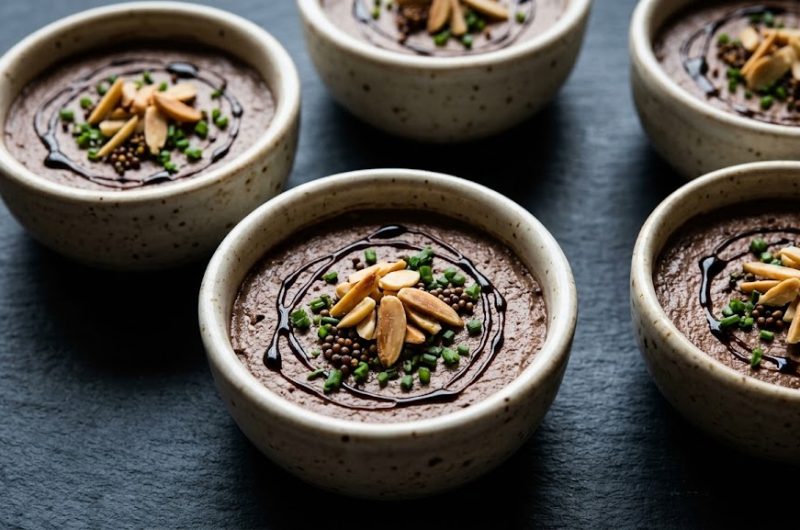
Delia Smith Chicken Liver Pate Recipe
Course: AppetizerCuisine: BritishDifficulty: Easy8
servings20
minutes30
minutes180
minutes285
kcal50
minutesSilky chicken liver pâté baked in a bain-marie, finished with a butter seal for a classic, spreadable starter.
Ingredients
450g chicken livers, trimmed
1 small onion, finely chopped
1 clove garlic, crushed
2 tbsp unsalted butter (for frying)
1 tbsp olive oil
1 tsp fresh thyme leaves (or 1/2 tsp dried)
1/2 tsp fine salt, plus more to taste
1/4 tsp black pepper
2 tbsp brandy (or cognac)
120ml double cream
75g unsalted butter, softened (for blending)
Pinch ground mace or nutmeg (optional)
80g unsalted butter (for the seal)
1 bay leaf (optional, for garnish)
Directions
- Preheat the oven to 160°C (140°C fan). Boil a kettle and set out a roasting tin for a bain-marie.
- Soften the onion in butter and oil for 8–10 minutes, then add garlic and thyme for 1 minute.
- Add the livers and cook until lightly browned outside but still slightly pink in the centre. Season.
- Pour in brandy and let it bubble for 30–60 seconds to cook off the harsh alcohol.
- Blend the mixture with cream and softened butter until very smooth. Strain if you want it extra-silky.
- Pour into a dish, set in a roasting tin, and add hot water halfway up the sides. Bake 25–30 minutes until just set.
- Cool to room temperature, then chill until firm.
- Melt the seal butter, skim off the foam, then pour the clear butter over the chilled pâté. Chill again until set.
Notes
- For the smoothest pâté, blend while warm and pass through a fine sieve.
- Don’t overcook the livers in the pan; they should be just cooked to keep the pâté tender.
- Keep the pâté refrigerated and bring to room temperature for 15 minutes before serving for best spreadability.